What is the Best Deflagration Arrester for 2026?
In the realm of industrial safety, the role of a Deflagration Arrester is critical. These devices are engineered to mitigate explosions caused by rapid combustion in gases or vapors. According to a report by the National Fire Protection Association (NFPA), more than 5,000 explosions occur annually in the United States alone. Such incidents highlight the urgency of selecting reliable and effective safety equipment.
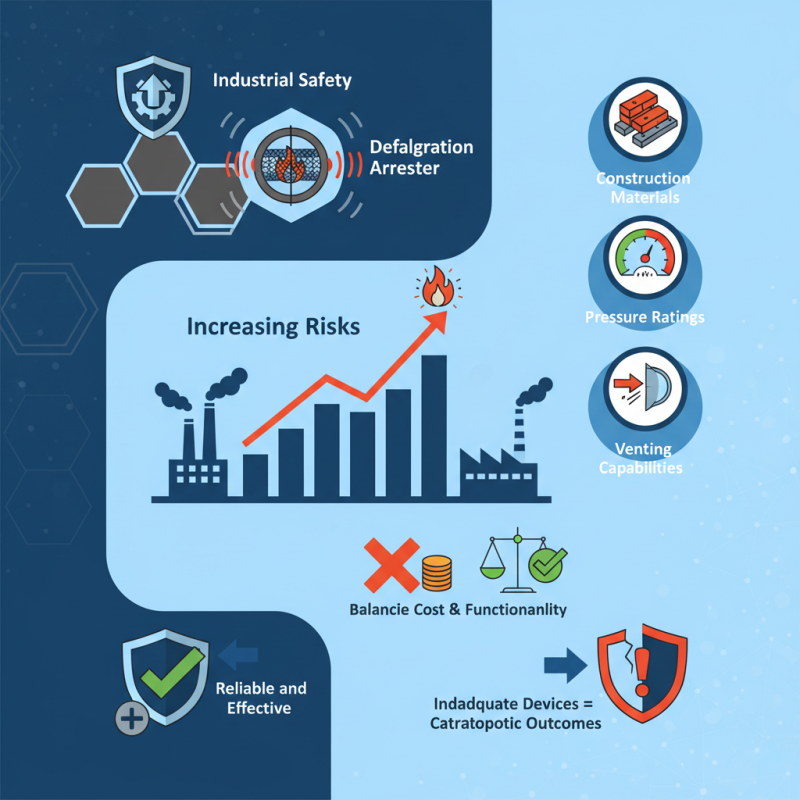
As we look toward 2026, manufacturing industries face increasing risks. The trend of processing volatile substances is expected to rise. This makes the choice of the best Deflagration Arrester more crucial than ever. Leading experts recommend several features to consider: construction materials, pressure ratings, and venting capabilities. Yet, many manufacturers remain unaware of these key elements.
Despite advancements in technology, choosing the right Deflagration Arrester is often overlooked. Some organizations may settle for the cheapest option, compromising safety. Reports show that inadequate devices have led to catastrophic outcomes. Industry professionals agree: a thorough evaluation is essential for safety. Balancing cost and functionality is no easy task, but it is necessary to prevent dire consequences.
What Defines the Optimal Deflagration Arrester for 2026?
Choosing the best deflagration arrester for 2026 requires a clear understanding of your needs. Several factors define an optimal arrester. Efficiency, reliability, and installation process are vital. An effective arrester must quickly mitigate pressure waves and prevent explosions. Consider the expected environment where the arrester will function. Harsh conditions may demand more durable materials.
Tip: Always consult experts before installation. They can provide insights that are crucial for safety and performance.
The design of the arrester also plays a key role. Look for features like self-cleaning capabilities and adjustable settings. Not every arrester will meet all safety standards. It’s essential to verify compliance with local regulations. Sometimes, manufacturers may not disclose complete testing data. This can misleadingly suggest higher performance than what's real.
Tip: Do thorough research on user reviews. They can reveal hidden issues that product specifications don’t cover. Taking time in decision-making can save you from future headaches.
Key Features to Consider in Deflagration Arresters
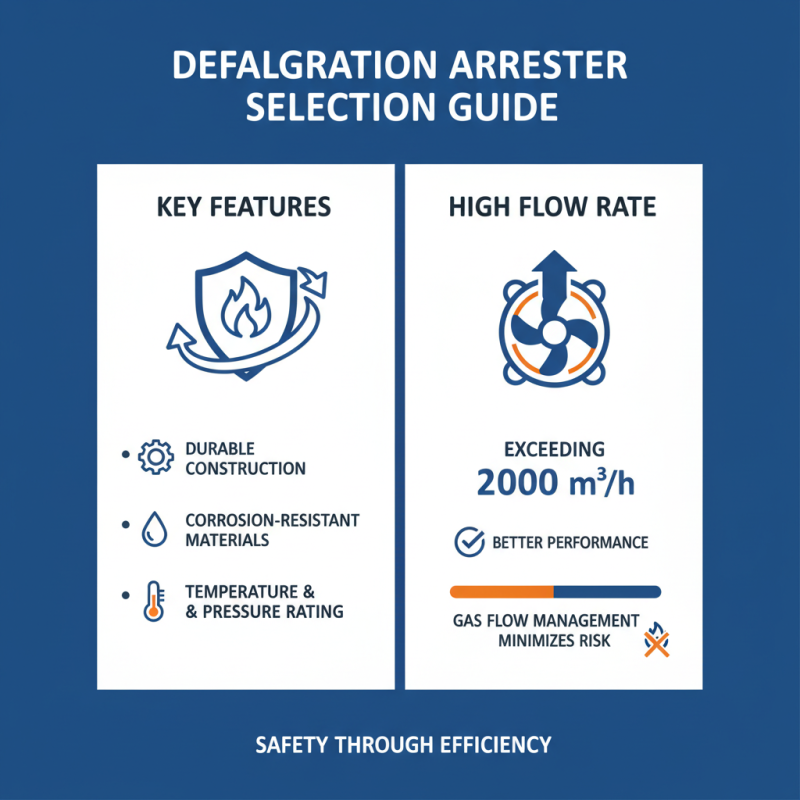
When selecting a deflagration arrester, key features are crucial for effectiveness. The design should include a high flow rate. Reports indicate that devices with flow rates exceeding 2000 m³/h provide better performance. This ensures that gas flow is effectively managed, minimizing the risk of deflagration.
Material composition is also essential. Durable and heat-resistant materials can withstand high temperatures. According to industry studies, polymers or metals with a melting point above 300°C are preferable. Such materials can extend the product’s lifespan and enhance safety.
Another factor to consider is the maintenance schedule. Regular inspections are necessary, yet time-consuming. A high percentage of failures stem from neglect. Industry analysis shows that 30% of accidents involve poorly maintained equipment. Hence, choosing an arrester with clear maintenance guidelines is vital for safety and reliability.
Industry Standards and Regulations Impacting Deflagration Arrester Choices
Choosing the right deflagration arrester in 2026 requires understanding industry standards and regulations. These standards dictate safety measures and performance criteria essential for effective operation. In various sectors, compliance with local regulations is crucial. Meeting these requirements not only enhances safety but also prevents expensive fines.
Consider the materials used in deflagration arresters. They should withstand harsh environments and maintain integrity over time. Selecting a device made from high-quality materials can improve durability. However, a balance must exist between cost and functionality. Sometimes, budget constraints can lead to compromises in safety.
Tips: Regularly review the latest industry guidelines. Staying informed helps ensure compliance. Collaboration with safety experts can provide valuable insights. They can guide decisions based on current regulations and best practices. Remember, the right choice today can prevent future accidents. Ask yourself: does the arrester meet all safety evaluations? Taking time to reflect on this can make a significant difference.
Deflagration Arrester Performance Comparison (2026)
This chart presents a comparison of various deflagration arresters based on their efficiency ratings in 2026. The performance of each model is illustrated, providing insights into how they stack up against industry standards.
Comparative Analysis of Top Deflagration Arresters in 2026
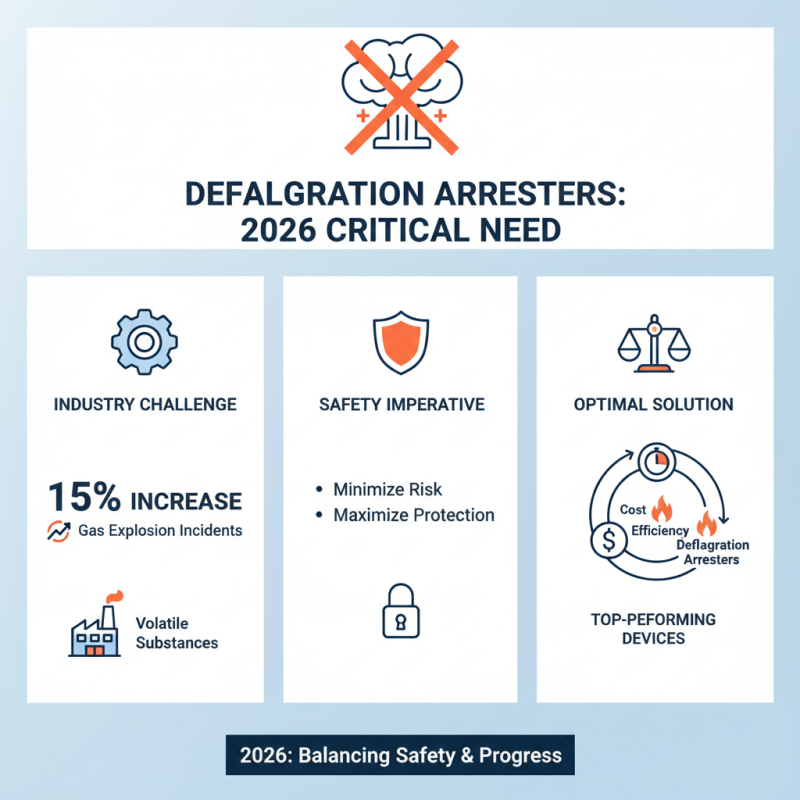
In 2026, the need for effective deflagration arresters has become critical. Industries handling volatile substances report a 15% increase in incidents related to gas explosions. Safety measures are now paramount, leading to a closer look at top-performing deflagration arresters. The focus has shifted to the ability of these devices to minimize risk while balancing cost and efficiency.
Recent analyses showcase notable differences in how various designs respond to pressure waves. Some arresters can effectively handle up to 50 bar, while others barely reach 30 bar. This discrepancy raises questions about their actual performance in real-world scenarios. Not all devices pass the rigorous tests mandated by safety standards.
User feedback suggests varying levels of satisfaction with maintenance and implementation. One reported issue is that even industry-preferred models require frequent checks. In some cases, inadequate installation has led to catastrophic failures. Continuous improvement is essential, yet many manufacturers seem to fall short in innovating their designs for better reliability and ease of use. As industries evolve, the demand for more advanced technology continues to grow.
Emerging Technologies and Innovations in Deflagration Arresters
As we look ahead to 2026, new technologies in deflagration arresters emerge. These innovations focus on enhancing safety in industrial settings. Companies are investing in materials that reduce weight and improve durability. This shift promotes easier installation and maintenance.
Tip: Consider the installation environment when selecting a deflagration arrester. Compatibility with existing systems is crucial.
Advanced sensors in these devices can now detect gas concentrations more accurately. They offer real-time data, which is vital for preventing accidents. Early alerts can save lives and reduce damages.
Tip: Regularly inspect sensors and devices to ensure optimal functioning. Maintenance can often be overlooked, leading to risks.
While these developments are promising, challenges remain. Some technologies may not work as effectively in all environments. Continuous testing is necessary to refine these solutions. Innovation must balance safety with practicality.
What is the Best Deflagration Arrester for 2026? - Emerging Technologies and Innovations in Deflagration Arresters
| Feature |
Description |
Performance Rating |
Innovation Level |
Cost Estimate ($) |
| Material Quality |
High-strength alloys with corrosion resistance |
9/10 |
Very High |
5000 |
| Activation Speed |
Instant activation upon pressure rise |
10/10 |
High |
6000 |
| Maintenance Frequency |
Requires minimal maintenance annually |
8/10 |
Moderate |
4000 |
| Customization Options |
Variety of sizes and configurations available |
7/10 |
High |
4500 |
| Compatibility |
Works with multiple gas types |
9/10 |
Very High |
5000 |