Leave Your Message

What Is an Arrester Blanket and How Does It Work?

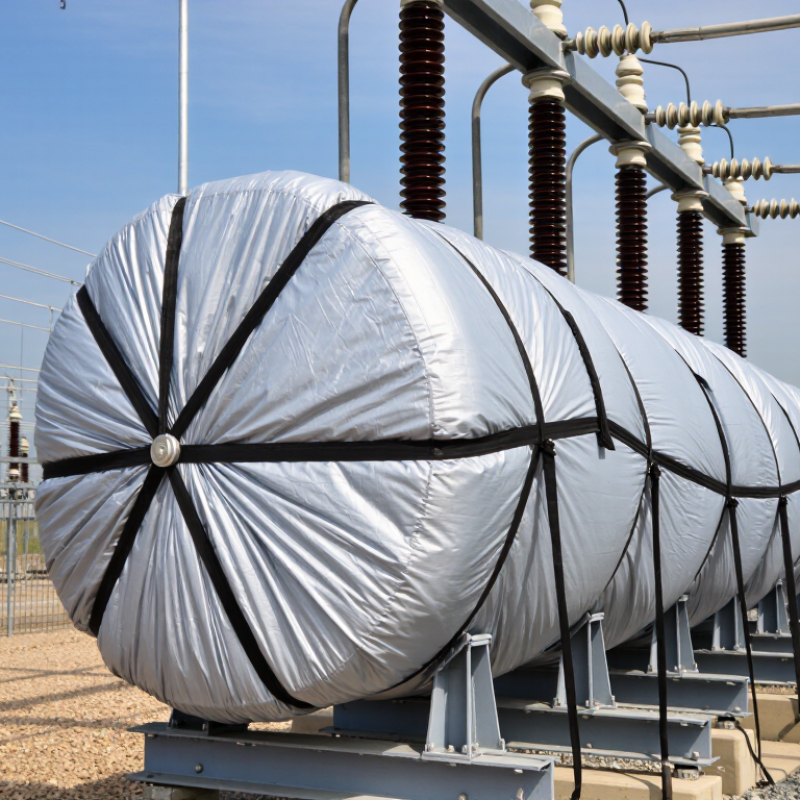
An Arrester Blanket is a protective covering designed to help contain fragments, heat, and energy when a surge arrester fails. It is commonly used around electrical arresters in substations, industrial plants, and utility equipment. The blanket does not stop a voltage surge. Instead, it supports safer failure management.

Electrical-safety educator Jim Phillips has often reminded professionals, “Safety is a journey, not a destination.” That principle applies here. An Arrester Blanket works through layered, heat-resistant materials and carefully placed fastening systems. During a violent arrester rupture, the layers can help restrict fragments and reduce the spread of burning material. The exact performance depends on the blanket’s design, fabric, installation, and tested energy rating.

Details matter. A loose strap can weaken protection. An incorrect size can leave dangerous gaps. Installation must follow the manufacturer’s instructions and the equipment’s operating conditions. Maintenance teams should inspect stitching, fasteners, surface damage, contamination, and signs of heat exposure.

The blanket is not a substitute for isolation, grounding, protective relays, or proper clearances. It is one additional safety barrier.

That distinction is easy to miss.

Terminology can also vary between manufacturers. Some products may be marketed as arrester blankets, containment blankets, or rupture-mitigation covers. Therefore, buyers should verify test data rather than trust the product name alone. A qualified electrical engineer should review compatibility before installation. The technology is practical, but not magical. Its value depends on correct selection, careful fitting, and disciplined inspection.
What Is an Arrester Blanket and How Does It Work?

Definition and Purpose of an Arrester Blanket

An arrester blanket is a protective covering placed around a surge arrester in electrical systems. Its purpose is to contain fragments, heat, and burning material if the arrester fails violently. It is not an ordinary fabric blanket. The construction usually includes heat-resistant, electrically suitable layers that fit around the arrester body and its connected hardware.

During a severe overvoltage event, the arrester directs excess electrical energy toward ground. If internal components rupture, the blanket helps limit the spread of hot debris and reduces the chance of damage to nearby equipment. It may also reduce exposure to workers, animals, or combustible materials. However, it does not stop electrical faults or replace proper grounding, spacing, and protective devices.

Installation requires careful attention. The blanket must fit without covering essential connections or blocking pressure-relief paths. Field technicians should inspect its seams, fasteners, surface damage, and signs of overheating. Moisture, aging, and incorrect positioning can weaken its protective role. Small details matter.

The term can be misleading.

An arrester blanket is a secondary safety measure, not a guarantee of containment. Its actual performance depends on the arrester design, fault energy, installation quality, and local electrical requirements. In practice, engineers should verify compatibility before use. A blanket that looks secure may still be unsuitable for a particular voltage class or mounting arrangement.

What Is an Arrester Blanket and How Does It Work?

An arrester blanket is a protective enclosure installed around a surge arrester. It does not clamp voltage or stop a surge; instead, it helps contain fragments and hot material if the arrester fails during a severe electrical event. The chart below shows a normalized surge-response concept: the arrester limits the voltage applied to connected equipment, while the blanket provides physical containment.

Conceptual normalized waveform: voltage values are expressed as a fraction of the incoming surge peak. Actual response depends on arrester design, system voltage, surge characteristics, installation, and applicable standards. An arrester blanket is a containment accessory and is not a substitute for correctly rated surge protection.

Main Components and Materials

An arrester blanket is a flexible safety barrier designed to slow, contain, or redirect moving equipment during an emergency. Its exact structure depends on the application, but the working principle remains similar. The blanket spreads force across a wider area instead of allowing one point to absorb the entire impact. It is not ordinary fabric.

The main load-bearing layer usually contains woven high-strength fibers. These fibers may include aramid, polyester, or other engineered materials selected for tensile strength and abrasion resistance. Some designs include an energy-absorbing core made from layered webbing, reinforced mesh, or compressible padding. This core helps reduce sudden movement and limits rebound. A protective outer cover shields the internal layers from moisture, dirt, heat, and repeated rubbing. Heavy stitching, reinforced edges, and corrosion-resistant attachment points complete the assembly.

During operation, anchors or restraint lines hold the blanket in its intended position. As a moving object contacts the surface, the fabric deforms and distributes the load through the webbing. The core absorbs part of the energy, while the anchors transfer remaining forces into the supporting structure. Small details matter. Loose stitching can weaken the system quickly. Field inspections should check cuts, frayed fibers, stretched sections, damaged hardware, and chemical contamination. A blanket may look usable while hidden fibers have lost strength. Manufacturer instructions and applicable safety standards should guide installation, testing, and replacement decisions. There is no safe shortcut here.

What Is an Arrester Blanket and How Does It Work? — Main Components and Materials
Data Dimension Typical Data Function and Technical Description
Product Type Protective blanket or weather shield for an electrical surge arrester An arrester blanket is an external protective covering used around or near a surge arrester. It is an accessory and does not replace the arrester’s internal electrical protection.
Primary Purpose Environmental protection The blanket helps reduce exposure to rain, ice, dust, salt deposits, ultraviolet radiation, chemical pollutants, and other outdoor contaminants that may accelerate surface aging.
Protected Equipment Metal-oxide surge arrester assembly The covered device commonly protects transformers, cables, switchgear, motors, generators, and overhead-line equipment from transient overvoltages caused by lightning or switching events.
Electrical Principle The blanket itself normally provides no intentional surge-current path Surge current is diverted through the arrester’s zinc-oxide varistor blocks to ground. The blanket mainly provides mechanical and environmental protection, unless a design specifically includes an insulating or grading function.
Main Cover Material UV-resistant silicone rubber, EPDM rubber, fiberglass-reinforced polymer, or coated technical fabric Material selection depends on voltage class, outdoor exposure, mechanical requirements, temperature range, and contamination severity. Silicone rubber is valued for hydrophobicity and outdoor tracking resistance.
Internal Surge-Arrester Element Zinc-oxide metal-oxide varistor blocks These blocks have highly nonlinear voltage-current behavior: they remain relatively high-resistance at normal operating voltage and become strongly conductive during an overvoltage surge.
Insulating Support Fiberglass-reinforced polymer rod or molded insulating body The support provides mechanical strength and electrical insulation between energized parts and grounded hardware. Fiberglass reinforcement improves tensile strength while keeping weight relatively low.
End Fittings Aluminum alloy, galvanized steel, stainless steel, or other corrosion-resistant metal End fittings connect the arrester to the line and ground terminals, maintain compression on internal components, and provide mechanical attachment points. Corrosion resistance is important in humid or coastal locations.
Sealing System Elastomeric seals, gaskets, bonded interfaces, and pressure-relief arrangements Sealing limits moisture ingress into the arrester housing. A pressure-relief design may provide a controlled path for internal gases if severe arrester failure occurs.
Fastening Components Stainless-steel clips, straps, bolts, clamps, hook-and-loop closures, or molded retainers Fasteners secure the blanket without damaging the arrester housing. They should be compatible with the installation environment and must not interfere with clearances, terminals, or pressure-relief zones.
Normal Operating Condition Very small leakage current through the surge arrester At normal system voltage, the zinc-oxide blocks conduct only a small leakage current. The blanket remains mechanically stable and should not obstruct heat dissipation or inspection points.
Lightning or Switching Surge Rapid reduction in arrester impedance When the surge voltage exceeds the arrester’s protective level, the zinc-oxide blocks conduct the surge current to ground and limit the voltage appearing across the protected equipment.
Hydrophobic Performance Most relevant to silicone-rubber external surfaces A hydrophobic surface tends to form separate water droplets rather than a continuous conductive film. This helps reduce leakage current and the risk of surface tracking under wet, polluted conditions.
Thermal Consideration The cover must allow adequate heat dissipation Surge arresters generate heat from continuous leakage current and temporary overvoltage duty. A blanket should not trap excessive heat or cover specified venting and pressure-relief areas.
Insulation Coordination Clearances and creepage distances must remain compliant The blanket must not reduce air clearance, create unintended conductive paths, bridge terminals, or alter the arrester’s external insulation performance. Installation should follow the applicable equipment design and safety requirements.
Typical Environmental Applications Coastal, industrial, agricultural, dusty, icy, and high-humidity locations The accessory is most useful where salt, pollution, moisture, birds, insects, ice, or airborne particles may increase contamination or mechanical exposure around the arrester.
Temperature Resistance Specified by the selected material and product design Outdoor elastomers and technical fabrics must tolerate expected ambient temperatures, solar heating, thermal cycling, and heat generated during arrester operation. The exact range must be confirmed from the product specification.
Inspection Requirements Periodic visual and mechanical inspection Inspect for cracking, hardening, tearing, discoloration, loose fasteners, corrosion, water retention, contamination, and interference with terminals or pressure-relief features.
Common Failure Modes Material aging, tearing, UV degradation, loose attachment, moisture accumulation, and corrosion A damaged or incorrectly fitted blanket can obstruct inspection, retain moisture, reduce clearances, or conceal arrester deterioration. Replacement should be based on condition and the applicable maintenance procedure.
Key Selection Criteria System voltage, arrester dimensions, environment, material compatibility, clearances, and maintenance access The blanket should be sized for the specific arrester configuration and installed without compromising electrical insulation, thermal performance, grounding, pressure relief, or visual inspection.

How an Arrester Blanket Stops an Aircraft

What Is an Arrester Blanket and How Does It Work?

How an Arrester Blanket Stops an Aircraft

An arrester blanket is a textile-based aircraft arresting device placed across or near a runway. Its exact design varies by airport and aircraft type. When an aircraft overruns the paved surface, its landing gear engages the blanket. The material wraps, grips, or redirects the wheels and struts. This engagement transfers motion into energy-absorbing components.

It does not stop an aircraft through friction alone. A 20,000-kilogram aircraft traveling at 70 meters per second carries about 49 megajoules of kinetic energy. The system must manage that energy progressively. FAA Advisory Circular AC 150/5220-9C identifies aircraft mass, approach speed, engagement geometry, and system certification as key design factors. Operators also inspect deployment paths, fabric condition, and attachment points.

Small details matter.

The International Air Transport Association’s 2023 Annual Safety Report recorded 30 accidents across approximately 36.8 million sectors. Runway excursions remain a recurring accident category, although the risk differs between aircraft and airports. An arrester blanket can create valuable stopping distance when normal braking becomes ineffective. It cannot correct every approach or surface problem. I may be too confident calling it a “blanket”; some systems function more like engineered barriers or arresting nets. That distinction matters during training, maintenance, and emergency planning.

Installation and Operation on Runways

What Is an Arrester Blanket and How Does It Work?
Installation and Operation on Runways

An arrester blanket is a surface system designed to slow an aircraft during a runway overrun. It uses crushable, energy-absorbing layers beneath a reinforced cover. When landing gear enters the blanket, the material compresses progressively. This creates drag and reduces the aircraft’s forward speed.

Installation begins with a detailed runway survey. Engineers check pavement strength, drainage, aircraft loads, and the available safety area. The blanket must align with the runway centerline. Its edges need secure transitions, clear markings, and reliable water control. The Federal Aviation Administration’s Advisory Circular 150/5220-22B stresses site-specific design and regular maintenance for aircraft arresting systems. The ICAO Safety Report also identifies runway excursions as a recurring aviation accident category. That data supports practical investment in engineered stopping areas, especially near runway ends.

Operation depends on correct aircraft entry speed, gear position, and system condition. Maintenance teams inspect surface damage, contamination, drainage, and compression changes. Small defects matter. A damaged cover can alter the stopping response.

Tips: Keep inspection records, measure surface condition after severe weather, and train crews to protect the system during snow removal. Do not assume visual checks are enough. In practice, drainage and edge transitions can be overlooked. That weakness deserves honest review. No arrester blanket removes every risk, but careful installation and disciplined inspection can provide valuable stopping distance when normal braking is no longer sufficient.

Inspection, Maintenance, and Safety Considerations

What Is an Arrester Blanket and How Does It Work?

An arrester blanket is typically a fire-resistant containment cover fitted around an electrical surge arrester. It does not stop voltage surges. Instead, it helps contain hot fragments, flame, and other debris if the arrester fails under severe electrical stress. Its layered construction can reduce flame spread and protect nearby equipment. The exact performance depends on its materials, design, and installation.

Inspection, Maintenance, and Safety Considerations

Inspect the blanket before installation and during scheduled equipment checks. Look for burns, cuts, melted stitching, loose fasteners, moisture, and chemical damage. Check that the cover does not touch energized parts or block pressure-relief paths. Small defects matter. A minor tear may expose a critical area during a fault.

Qualified personnel should inspect the arrester and blanket together, following site procedures and the equipment manufacturer’s instructions. The circuit must be placed in a safe, verified condition before hands-on work begins. Never treat the blanket as a substitute for grounding, electrical clearances, protective relays, or an approved isolation process. Keep records of inspection dates, defects, repairs, and replacement decisions.

Cleaning should use only approved methods. Harsh solvents can weaken fire-resistant fabrics without leaving obvious marks. Replacement may be wiser than repair when thermal damage appears. One practical lesson deserves attention: a blanket can look acceptable while its inner layers have deteriorated. When uncertainty remains, remove it from service and request a competent technical assessment. Safety assumptions should not be based on appearance alone.