What is the Best Deflagration Arrester for Global Buyers?
In the realm of industrial safety, a Deflagration Arrester plays a crucial role. Its primary function is to prevent explosive events in high-risk environments. As industries evolve, selecting the right deflagration arrester becomes challenging. Various types are available, each catering to specific needs and conditions. This can lead to confusion among global buyers.
Understanding the optimal choice requires expertise. Not all devices guarantee the same level of protection. Factors include installation location, material compatibility, and operational conditions. Buyers should consider these elements carefully to avoid potential hazards. There are many options on the market, yet not all meet stringent safety standards.
Ultimately, relying on industry knowledge and guidelines is essential. Consulting with experts can illuminate the benefits and drawbacks of different models. As the market for deflagration arresters grows, awareness of their importance in maintaining safety standards cannot be overstated. Buyers must undertake thorough research to identify the best solutions tailored to specific applications.

Deflagration Arrester Overview: Understanding the Basics
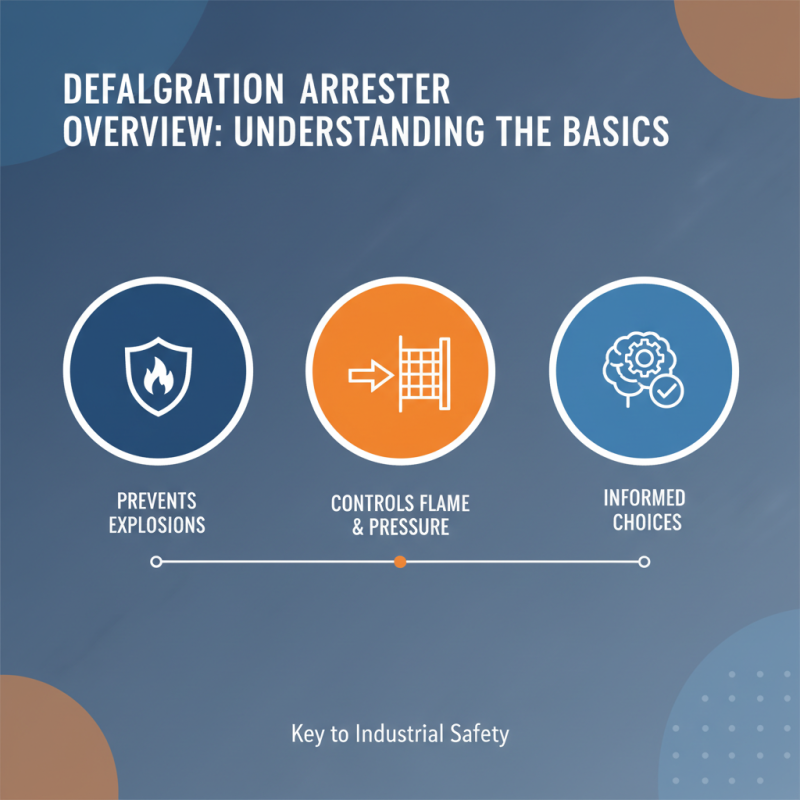
Deflagration arresters play a crucial role in preventing hazardous explosions. They are designed to control the propagation of flames and pressure waves during a deflagration event. Understanding their basic functions can help users make informed choices.
These devices typically include a flame arrestor and pressure relief features. The flame arrestor cools and extinguishes flames while allowing gases to pass. Pressure relief mechanisms help manage sudden pressure spikes. This ensures safety in industrial settings where flammable materials are handled. However, choosing the right arrester can be challenging.
Some key factors influence the effectiveness of deflagration arresters. Size, material, and installation location matter significantly. Miscalculating these aspects can lead to inefficiencies. Regular maintenance is also essential to ensure reliability. Users must be vigilant, as even small lapses can compromise safety. Understanding these variables helps clarify their importance in industrial safety systems.
Key Features to Consider When Choosing a Deflagration Arrester
When selecting a deflagration arrester, key features play a critical role. A primary consideration is the operational environment. For instance, the material of the arrester must withstand specific temperatures and pressure conditions. According to industry reports, over 40% of deflagration incidents arise in high-temperature settings. Hence, choosing materials like stainless steel or aluminum can enhance durability.
Another significant factor is the design and technology of the arrester. The effectiveness of the flame trap is crucial. Studies indicate that devices with advanced flame arresting technologies reduce transmission risks by nearly 60%. Additionally, maintenance requirements should not be overlooked. Regular checks can identify wear and tear, helping to ensure long-term performance.
Compatibility with existing systems matters too. Not all arresters fit seamlessly into every industrial setup. Data suggests that up to 30% of installations face functional issues due to compatibility problems. Selecting the right arrester requires careful evaluation, highlighting the importance of professional consultations. Industry experts emphasize reviewing specifications and consulting professional resources to avoid missteps.
Top Deflagration Arrester Brands for Global Buyers
Deflagration arresters play a crucial role in preventing hazardous explosions in various industrial settings. These devices are designed to interrupt the rapid combustion process and protect both personnel and equipment. According to a report by the National Fire Protection Association, incidents involving combustible dust and gas can lead to severe injuries and substantial economic losses. Hence, choosing the right deflagration arrester is vital for safety and compliance.
When selecting a deflagration arrester, global buyers should consider several leading brands recognized for their innovative technology and reliability. Studies show that arresters with composite materials offer improved resistance to corrosion, leading to longer life spans. Additionally, devices that utilize advanced flame arresting technology can effectively minimize re-ignition risks. These options are becoming increasingly popular in sectors such as chemical processing and food manufacturing.
Data from market analyses indicate that the demand for high-quality deflagration arresters is rising significantly. Factors such as stricter safety regulations and a growing focus on workplace safety contribute to this trend. However, not all products on the market meet the necessary standards, making it imperative for buyers to critically assess specifications and certifications. Awareness of these elements is essential for making informed decisions.
Best Deflagration Arrester Performance Comparison
Comparative Analysis of Deflagration Arresters in Different Markets
In the realm of safety equipment, deflagration arresters play a crucial role. Their effectiveness can vary significantly across different markets. This variability often stems from local regulations, industry standards, and environmental factors. Understanding these differences is essential for global buyers looking for reliable solutions.
For instance, some markets prioritize materials that withstand
extreme temperatures. In contrast, others may emphasize cost-effectiveness over resilience. It's important to analyze specific applications. Deflagration arresters in chemical industries may require different designs compared to those in oil and gas sectors. Each application presents unique challenges that must be addressed.
Moreover, user feedback often reveals gaps in performance. Certain designs might perform excellently in theory but fail in real-world conditions. Buyers should always seek data from numerous sources. Thorough analysis, including case studies and peer reviews, can provide valuable insights. This level of diligence ensures that the chosen deflagration arrester meets both safety standards and operational demands.
Regulatory Standards and Compliance for Deflagration Arresters Worldwide
When selecting deflagration arresters, understanding global regulatory standards is crucial. Different regions have varied requirements. Compliance can involve certifications that ensure safety and reliability in various industries. The most common standards include those from the European Union, the United States, and specific country regulations. These standards focus on design, testing, and installation practices.
Manufacturers must stay updated on evolving regulations. This can pose challenges. Some standards may conflict, creating confusion for buyers. Technical documentation plays a key role here. Proper documentation helps with compliance. Buyers often overlook this, but it directly impacts safety and functionality.
Sometimes, organizations rely on outdated information. They may assume all arresters meet universal standards. This assumption is risky. Each application may demand unique features. Understanding these nuances can enhance safety measures. Awareness of the local context is essential for effective implementation. Ensuring rigorous compliance safeguards both equipment and personnel.