Leave Your Message
A Blanket Gas Regulator controls the supply of inert gas to a tank’s vapor space. Its purpose is practical: maintain a small positive pressure and reduce the chance of outside air entering as liquid is withdrawn or the contents cool. Picture a storage tank, a pressure-sensing line, and a regulator responding as headspace pressure changes. The details matter.
Instrumentation and process-control author Béla Lipták provides a useful engineering perspective. The following is a paraphrase, not a verified direct quotation: “Good control depends on sensing the process accurately and responding in a stable, predictable way.” That principle helps explain the regulator’s basic operation. When tank pressure falls below its set point, the device opens to admit blanketing gas. As pressure recovers, it reduces or stops the flow. A simple cycle. Yet regulator selection, sizing, and installation affect how reliably it performs.
This guide explains the components, pressure-sensing action, and typical operating sequence. It also considers what can go wrong, such as an incorrect set point or unstable supply pressure. A regulator does not replace sound tank design or other protective devices. Nor does one setting suit every vessel. Engineers must consider tank limits, gas demand, operating conditions, and the manufacturer’s instructions. The less obvious part is often the hardest: real systems do not behave as neatly as diagrams suggest. A careful explanation should make those limits clear, not hide them behind polished claims.
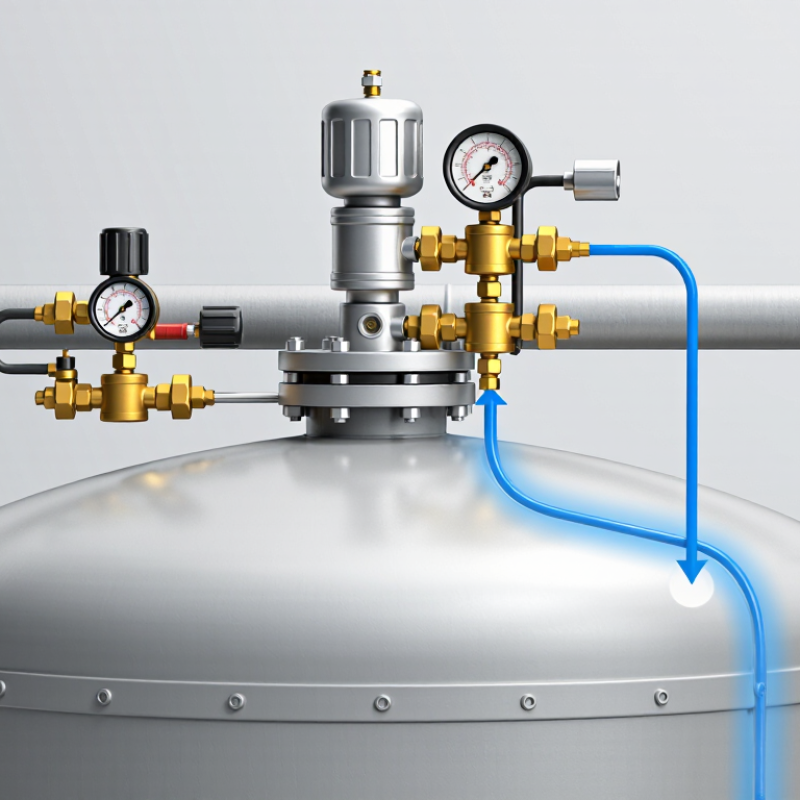
A blanket gas regulator maintains a small, controlled pressure of inert gas above the liquid in a storage tank. When liquid is withdrawn, the gas space expands and pressure falls. The regulator then admits gas to restore the set pressure. During filling, pressure rises, so a separate venting device may release vapor. This helps limit air and moisture entering the tank and reduces oxidation risks. It is not a substitute for emergency venting. API Standard 2000 addresses venting of atmospheric and low-pressure storage tanks.
The NACE IMPACT study estimated global corrosion costs at US$2.5 trillion annually, or 3.4% of global GDP, and reported that corrosion-control practices could save 15–35%. These figures cover many industries, not blanket-regulated tanks alone. Still, they show why sound pressure control and inspection matter. The EPA’s AP-42 Chapter 7.1 also describes storage-tank emissions from standing and working losses. A poorly chosen regulator setting can create avoidable venting or unstable pressure. Actual settings depend on tank design and operating conditions.
Tips: Check the regulator set point, supply pressure, and vent capacity against the tank’s design documents. Inspect for plugged lines and sticking valves. Keep records. A blanket regulator protects only when the whole pressure-control system works together.
| Topic | How It Works | Practical Data or Example |
|---|---|---|
| Purpose | A blanket gas regulator supplies an inert gas, commonly nitrogen, to maintain positive pressure above the liquid in a storage tank. This helps reduce air and moisture ingress and can limit oxidation or contamination of the stored product. | Used where the product or process benefits from an inert gas headspace. The required gas and materials depend on the product and process. |
| Pressure sensing | A diaphragm or similar sensing element responds to tank pressure. A spring or pilot mechanism establishes the pressure set point. | The regulator is selected for low-pressure service; tank pressure limits must be confirmed from the tank design and applicable requirements. |
| Gas admission | When tank pressure falls below the set point, the regulator opens and admits gas from the supply. As pressure rises toward the set point, it throttles or closes the gas flow. | Pressure can fall during liquid withdrawal, cooling, or condensation of vapors. Gas demand depends on the tank, operating cycle, and process. |
| Typical pressure range | Blanketing is generally maintained at a small positive pressure rather than at the pressure used in high-pressure gas systems. | A low-pressure example is approximately 1–6 in. water column (about 0.25–1.5 kPa). This is illustrative only; actual settings are application-specific. |
| Main components | A typical installation includes a gas supply, isolation valve, filter or strainer where appropriate, blanket regulator, pressure indication, and tank connections. | Additional components may be needed for gas conditioning, flow measurement, alarms, or maintenance isolation. |
| Pressure protection | The blanket regulator controls gas admission; it is not a substitute for independent tank pressure and vacuum protection. | Tank pressure-vacuum relief devices should be selected and sized for the tank and its credible operating and emergency conditions. |
| Sizing considerations | Selection accounts for required gas flow, available supply pressure, regulator droop, tank pressure limits, and the effects of withdrawal and temperature changes. | A qualified engineer should verify capacity and set points for the specific tank and service. |
| Inspection and operation | Routine checks help confirm that the supply is available, the regulator responds correctly, and the pressure indication and protective devices remain functional. | Inspection intervals and procedures should follow the facility’s maintenance program and applicable codes. |