Top 10 Benefits of Using a Deflagration Arrester?
In industrial environments, safety is paramount. The use of a Deflagration Arrester can significantly enhance operational safety. According to the National Fire Protection Association (NFPA), incidents related to explosive deflagrations can lead to severe injuries or fatalities. It is crucial to employ devices that mitigate these risks.
Dr. James Carlton, an expert in explosion prevention, states, "Deflagration Arresters are essential for protecting equipment and personnel." These devices interrupt the combustion process. They prevent flame propagation, safeguarding facilities from devastating explosions. Notably, over 80% of reported industrial accidents are linked to explosive materials.
Implementing a Deflagration Arrester not only complies with safety regulations but also increases workplace efficiency. However, some industries still hesitate. They lack awareness of the benefits. Inadequate information can lead to costly mistakes. Ensuring all employees understand these devices is vital for safety and operational integrity.
What is a Deflagration Arrester and Its Purpose in Safety Systems
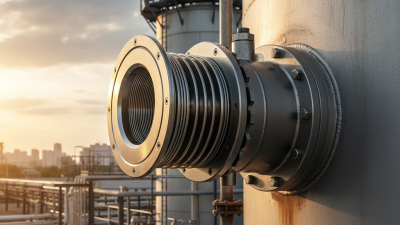
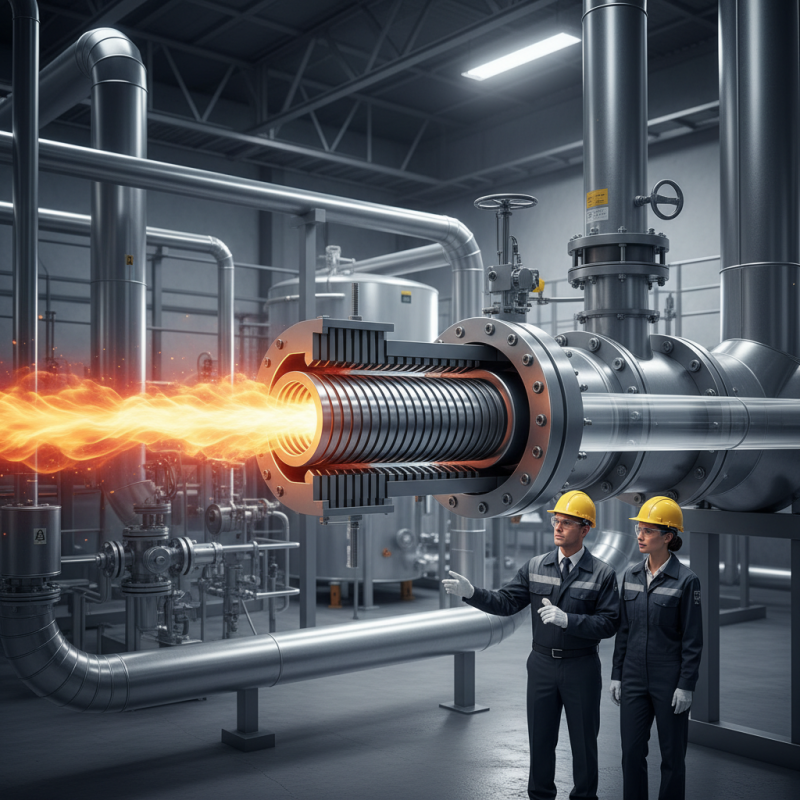
A deflagration arrester is a crucial component in many safety systems. It helps prevent the propagation of flames in gas and dust environments. When an explosive mix ignites, the arrester intercepts and dissipates energy. This reduces the risk of damage and injury.
Install these devices in areas with flammable contents. Their effectiveness depends on correct positioning. Improper installation may lead to catastrophic results. Regular maintenance is essential. Even a slightly blocked arrester can fail.
Here’s a tip: always choose the right type of arrester for your specific application. Consider the potential hazards involved. Also, train personnel regularly on how to inspect these devices. Awareness and knowledge are key to maintaining safety.
Don’t overlook the importance of deflagration arresters. Their design may seem simple, but they play a critical role. Evaluate your systems and check if you have them installed. Ignoring them can lead to dangerous situations.
Top 10 Benefits of Using a Deflagration Arrester
| Benefit |
Description |
| Explosion Mitigation |
Deflagration arresters prevent the propagation of flames, thus reducing the risk of catastrophic explosions. |
| Safety Enhancement |
They significantly enhance the safety of industrial systems by controlling combustion events. |
| Cost-Effective Solution |
Installing deflagration arresters can be more economical than extensive explosion relief systems. |
| Regulatory Compliance |
Helps organizations meet safety regulations and standards imposed by authorities. |
| Versatility |
Applicable in various industries including chemical, petrochemical, and food processing. |
| Easy Installation |
Deflagration arresters can be easily integrated into existing systems without major modifications. |
| Maintenance-Friendly |
Many designs require minimal maintenance, allowing for cost savings over time. |
| Increased Operational Reliability |
Reduces unplanned downtimes due to safety incidents involving combustion and explosions. |
| Fire Risk Reduction |
Lowers the chances of fire breaking out in flammable environments by controlling flames effectively. |
| Protection of Personnel and Assets |
Enhances the protection of personnel and valuable assets in hazardous environments. |
How Deflagration Arresters Prevent Explosive Pressure Waves in Pipelines
Deflagration arresters play a crucial role in protecting industrial pipelines from explosive pressure waves. When combustible gases or vapors ignite in a confined space, they generate fast-moving pressure waves. These waves can damage equipment and pose severe risks to personnel. According to industry reports, installations of deflagration arresters can reduce explosion-related damage by up to 90%. This significant reduction highlights their importance in safety protocols.
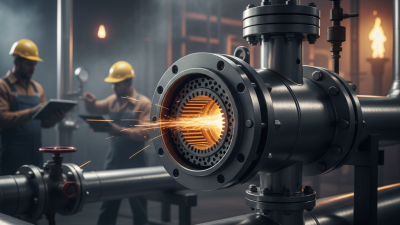
The design of a deflagration arrester allows it to detect pressure increases caused by a deflagration event. When a sudden rise in pressure occurs, the device works by slowing down the pressure wave, effectively protecting downstream equipment. In many cases, poorly designed systems can increase the risk of damage rather than preventing it.
A study from a leading safety organization noted that improperly maintained arresters had a failure rate of up to 25%.
Regular maintenance and inspection of deflagration arresters are essential. Even a small buildup of debris can compromise their effectiveness. Industry experts emphasize that awareness and action on these details can vastly improve overall safety. Companies must ask tough questions about their current safety systems. A small oversight could lead to severe consequences.
Key Benefits of Incorporating Deflagration Arresters in Industrial Processes
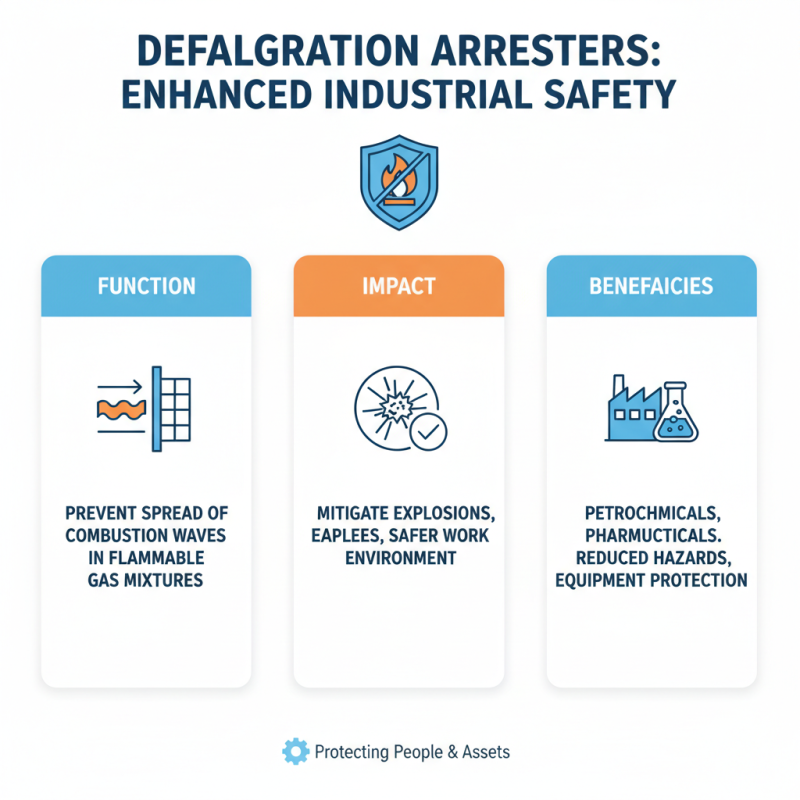
Deflagration arresters play a crucial role in enhancing safety in diverse industrial settings. These devices prevent the spread of combustion waves in flammable gas mixtures. By effectively managing potential explosions, they provide a safer work environment. Industries like petrochemicals and pharmaceuticals benefit significantly. Workers are exposed to fewer hazards, and equipment is less likely to be damaged.
Incorporating deflagration arresters can also lead to material savings. They help minimize the risk of costly downtime caused by explosions. This not only maintains productivity but also protects valuable assets. Yet, some facilities overlook their importance. They might prioritize cost over safety, only to face dire consequences later on. Learning from these situations can improve safety protocols and disaster preparedness.
Moreover, regular maintenance of deflagration arresters is essential. Neglecting this step can compromise their effectiveness. It is a glaring issue that many industries face, focusing too much on production efficiency. That focus can lead to dangerous oversights. Continuous training and awareness are needed to instill a culture of safety among employees. A proactive approach can be the difference between safety and disaster.
Impact of Deflagration Arresters on Operational Efficiency and Cost Savings
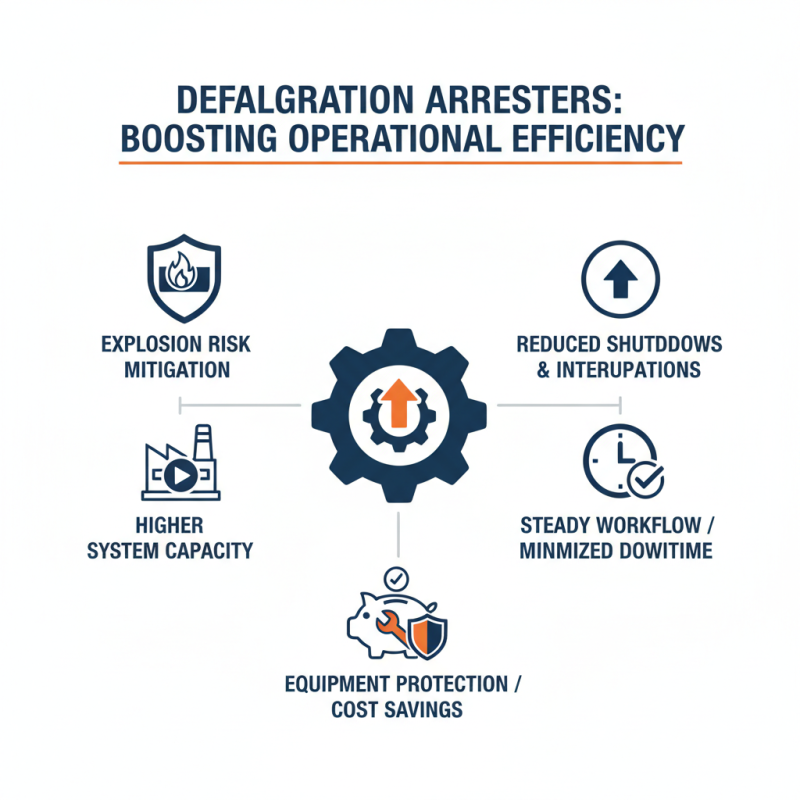
Deflagration arresters play a crucial role in enhancing operational efficiency in various industries. By mitigating explosion risks, they allow systems to operate at higher capacities. This increased safety translates into fewer shutdowns and interruptions. Companies can maintain a steady workflow, minimizing downtime. Moreover, when a deflagration occurs, the arrester prevents damage to equipment, which is vital for long-term cost savings.
Utilizing deflagration arresters can lead to significant savings over time. Without these devices, operational losses due to accidents can quickly accumulate. Repairing or replacing damaged equipment is expensive. Additionally, insurance costs may rise if safety measures are inadequate. Installing deflagration arresters is a proactive approach. However, some might overlook the need for regular maintenance. This oversight could create vulnerabilities, possibly negating the benefits.
While the advantages are clear, there's always room for improvement. Some operators may not fully understand how to maximize the effectiveness of arresters. Training staff on proper usage can elevate safety standards. Awareness of potential installation flaws is also necessary. A collaborative effort to review current systems can uncover hidden risks. Exploring these areas can lead to greater operational efficiency and enhanced safety.
Regulatory Standards and Compliance for Using Deflagration Arresters
Understanding regulatory standards is essential for using deflagration arresters effectively. Many industries utilize these devices to prevent explosive deflagration. Compliance with guidelines ensures safety and reduces risks. According to the National Fire Protection Association (NFPA), over 60% of industrial explosions were preventable through proper equipment. However, not all industries follow the guidelines effectively.
In the United States, the Occupational Safety and Health Administration (OSHA) enforces safety standards that include the use of deflagration arresters. Reports indicate that organizations neglect regular inspections. This oversights can lead to catastrophic incidents. Interestingly, while most industries understand the need for compliance, only 40% effectively implement the recommended practices.
Data from the Chemical Safety Board shows that most explosions happen in facilities without adequate preventive measures. These statistics highlight the necessity for a stronger focus on regulatory compliance. Organizations must regularly train employees on safety protocols. Education on equipment use is often insufficient, leaving potential gaps in safety. Without continuous improvement in training and adherence to regulations, the risk of failure remains high.
Top 10 Benefits of Using a Deflagration Arrester
This chart illustrates the benefits of using a deflagration arrester, highlighting how they contribute to safety and compliance standards.