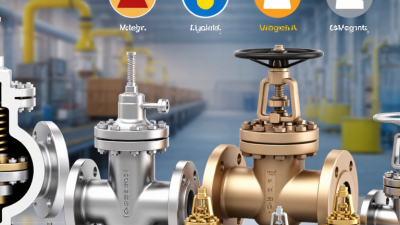
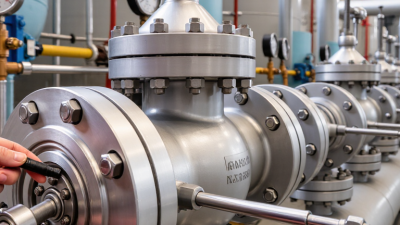
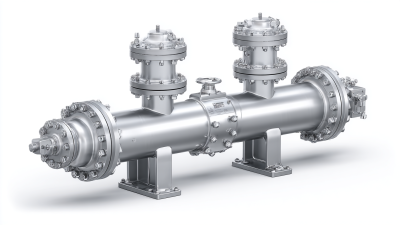
For global buyers, choosing an Emergency Relief Valve manufacturer is a safety decision, not merely a sourcing exercise. The right valve must match the pressure, temperature, fluid, and operating conditions of its system. A mismatch can mean unstable operation, unnecessary releases, or equipment exposed to excess pressure. Details matter.
Process-safety pioneer Trevor Kletz is often credited with the reminder, “What you don’t have, can’t leak.” His principle is not a valve-selection rule, but it encourages buyers to question avoidable hazards before relying on protective equipment. An Emergency Relief Valve remains essential where overpressure risks exist; careful design, correct sizing, and competent installation matter just as much as the product name.
This guide introduces manufacturers serving international markets and the factors buyers can compare: product range, technical documentation, testing capabilities, material options, delivery support, and service after installation. Look beyond polished catalogs. Ask how a supplier handles sizing data, traceability, spare parts, and application-specific questions. Not just price.
There is no universal shortlist for every plant. A supplier suited to a compact process line may not fit a large refinery or a specialized chemical service. And even a strong manufacturer cannot compensate for incomplete system information. Treat comparisons as a starting point, verify claims directly, and involve qualified engineers before specifying a valve. The choice deserves a second look.

Emergency relief valves protect vessels and tanks when pressure rises beyond safe operating limits. They open at a set pressure, discharge fluid, then reseat if their design permits. The choice depends on the fluid, operating pressure, required capacity, and likely failure scenario. Spring-loaded valves are common and respond directly to inlet pressure. Pilot-operated valves use a smaller pilot mechanism to control the main valve, which can help where operating pressure approaches the set point. Rupture disks are non-reclosing devices; they burst at a defined pressure and may be installed alone or with a valve.
Small details matter.
Design is more than selecting an opening pressure. Engineers assess accumulation, backpressure, discharge piping, and where released material will go. API Standard 520 addresses sizing and selection; API Standard 521 covers pressure-relieving and depressuring systems.
The U.S. Chemical Safety Board’s 2007 investigation of the BP Texas City refinery explosion recorded 15 deaths and 180 injuries, highlighting the consequences of hazardous releases and poor system safeguards. That incident was not simply a valve-sizing problem. A correctly sized valve can still sit within a weak protection system.
Real operating conditions also change, and calculations deserve periodic review. Not every case fits a standard example.
Evaluate emergency relief valve manufacturers by checking engineering evidence, not polished claims. Ask for sizing calculations based on credible worst-case scenarios, including blocked outlets, fire exposure, and thermal expansion. The documentation should state set pressure, allowable overpressure, backpressure limits, materials, and test conditions. Confirm that designs and tests align with applicable standards, such as API 520, API 526, API 527, or ISO 4126. Request traceable material records and recent test certificates. Vague answers matter.
The U.S. Chemical Safety Board’s T2 Laboratories investigation report recorded four deaths and 32 injuries in a 2007 reactive chemical explosion. The report examined process hazards and safeguards; it does not show that a relief valve alone caused the event. It does underline why buyers should assess the complete protection system, not just the valve. Ask manufacturers how they validate capacity, manage tolerances, and support inspection after installation. Check whether service teams can explain failure modes in plain language and provide realistic maintenance intervals.
Tip: Compare sample calculations and test records from shortlisted suppliers. Ask what changes when the fluid contains solids or corrodes trim materials. A tidy brochure is not proof. I would still question any supplier that promises a universal solution; operating details can change the answer.
Leading emergency relief valve manufacturers for global buyers demonstrate more than production capacity. They provide sizing support, material traceability, test records, and clear guidance for local operating conditions. A valve protecting a storage tank may face sudden vapor release, corrosive service, or temperature swings. Small details matter. API Standard 2000 covers venting for atmospheric and low-pressure storage tanks, while API 520 addresses pressure-relief device sizing and selection. Buyers should confirm which standard applies to their equipment.
Demand growth adds pressure to procurement decisions. The International Energy Agency’s Oil 2024 report projects global oil demand will reach nearly 106 million barrels per day by 2030, about 3.2 million barrels per day above 2023 levels. This forecast is not a valve-market estimate, but it signals continued activity across facilities that rely on pressure protection. Manufacturers serving international projects should explain material choices, set-pressure tolerances, inspection procedures, and spare-parts availability in practical terms.
Compare suppliers using the same operating data: fluid composition, design pressure, temperature, and required relieving capacity. Ask for documented test results and technical support across time zones. A polished catalogue is not proof of dependable field performance. This is where buyers sometimes fall short: they compare price before checking whether the proposed valve suits the actual process. A useful supplier will question incomplete specifications, not simply quote a model.
Emergency relief valve suppliers should be compared by documented compliance, not certificate logos alone. Buyers should verify whether designs match applicable requirements, such as ASME Boiler and Pressure Vessel Code Section VIII, and request material traceability, calibrated test records, and clear set-pressure documentation. For European projects, confirm the applicable pressure-equipment conformity route. Details matter. The ISO Survey 2022 recorded 1,265,216 valid ISO 9001 certificates across 189 countries and economies. This shows how widely quality-management systems are used, but ISO 9001 alone does not certify a valve’s pressure performance. Check the actual product scope and test evidence.
Range matters when one facility needs different connection sizes, materials, pressure settings, or certified accessories. Ask for published operating limits and application guidance, especially for corrosive service or rapid pressure changes. A broad catalogue is not automatically a good fit. International support also deserves close inspection: confirm local-language manuals, time-zone coverage, spare-part availability, and realistic delivery estimates. The World Bank’s Connecting to Compete 2023 assessed logistics performance across 139 economies, including customs, tracking, and timeliness. It does not measure valve suppliers directly, but it underlines why cross-border delivery can vary. Request a sample shipment schedule and written escalation contacts before placing an urgent order. These checks can expose gaps that a polished catalogue may not show.
A relief valve is only as dependable as its sizing, materials, and test record. The IEA’s Oil 2024 report projects global oil demand will rise by 3.2 million barrels per day between 2023 and 2030, reaching 105.4 million barrels per day. That outlook makes duty-specific selection important for many facilities. Ask suppliers to confirm capacity against your actual fluid, temperature, set pressure, backpressure, and operating conditions. A catalogue match is not enough.
Check the manufacturer’s approvals against the code and service required. For applicable pressure vessels, verify the relevant ASME certification and scope directly with the issuing organization; do not rely on a logo in a brochure. Request material certificates, serial-number traceability, calibration records, and witnessed test results for the proposed valve. Compare these records with the nameplate and purchase specification. Small mismatches matter.
Ask how the supplier handles lead times, replacement parts, and field support. Review references for similar media and operating conditions, not just large project names. A polished factory tour helps, but it cannot replace document checks. I would also ask to see an actual test procedure; sometimes the paperwork looks stronger than the process. Then compare total lifecycle support, not only the quoted price.
| Evaluation Dimension | What Buyers Should Verify | Useful Evidence | Selection Guidance |
|---|---|---|---|
| Applicable codes and market requirements | Confirm which design, certification, and jurisdictional requirements apply to the valve and its intended service. Common references include ASME BPVC Section VIII, API 520/521/526/527, and the ISO 4126 series; applicability depends on the project and valve type. | A project-specific compliance matrix; current certificates or authorization records; confirmation of certificate scope and validity. | Prefer suppliers that identify the applicable standard and explain the limits of each approval rather than claiming universal compliance. |
| Capacity and sizing basis | Check that the proposed orifice and certified relieving capacity cover the documented relief scenario. Sizing should use the governing process conditions and applicable calculation method. | A calculation sheet stating fluid, phase, relieving pressure, temperature, required capacity, assumptions, and selected valve data. | Do not compare nominal sizes alone. Confirm the certified capacity for the relevant configuration and operating conditions. |
| Set pressure and operating conditions | Verify the specified set pressure, inlet pressure losses, backpressure, temperature, and normal operating pressure against the design basis and applicable code. | Approved datasheet, set-pressure test record, and documented assumptions for superimposed or built-up backpressure where relevant. | Request written confirmation that the selected design is suitable for the actual installation, including discharge piping conditions. |
| Materials and process compatibility | Check body, trim, spring, and sealing materials against fluid composition, corrosion risk, temperature, and pressure. Material suitability is service-specific. | Bill of materials, material test certificates where specified, material traceability records, and compatibility review for the process fluid. | Specify material grades and documentation requirements in the purchase order; avoid relying on generic descriptions such as “corrosion resistant.” |
| Manufacturing quality controls | Review how the supplier controls design changes, incoming materials, machining, assembly, inspection, and nonconforming products. An ISO 9001 certificate indicates a quality management system, not product approval by itself. | Current quality-system certificate, process-control records, inspection and test plans, and sample manufacturing records for comparable products. | Check certificate scope, issuing body, and validity; assess product-specific controls separately from management-system certification. |
| Testing and documentation | Confirm the required tests and records for the order. API 527 addresses seat tightness testing for pressure-relief valves; test requirements depend on the specification and agreed purchase scope. | Pressure and seat-tightness test reports, set-pressure results, inspection records, certificates of conformity, and traceable serial or lot numbers as required. | Agree acceptance criteria and document formats before production; verify that reports identify the supplied valve and test conditions. |
| Configuration and connections | Match inlet and outlet sizes, pressure class, facing, end connection, installation orientation, and accessories to the piping specification. API 526 provides standard face-to-face dimensions for certain flanged steel pressure-relief valves. | Dimensioned drawings, connection details, nameplate data, and confirmation of any deviations from the project piping class. | Review the final drawing before manufacture, especially where replacement interchangeability or restricted installation space matters. |
| Service, repair, and spare parts | Assess access to qualified inspection, testing, repair, and replacement parts in the operating region. Confirm who is authorized to perform service and what records are issued. | Service coverage map, repair procedure, technician qualifications, spare-parts list, lead-time commitments, and warranty terms. | For critical equipment, weigh lifecycle support and parts availability alongside purchase price. |
| Supplier verification and commercial risk | Verify the legal entity, manufacturing location, product scope, export capability, and consistency between quotations, certificates, drawings, and nameplates. | Business registration details, independently verifiable certificate records, factory audit findings where required, references for comparable service, and a controlled document list. | Resolve inconsistent or unverifiable claims before payment or release for manufacture; define inspection, delivery, and documentation milestones in the contract. |
Note: Final valve selection and code compliance should be confirmed by qualified engineering personnel against the applicable jurisdiction, process safety basis, and project specification.