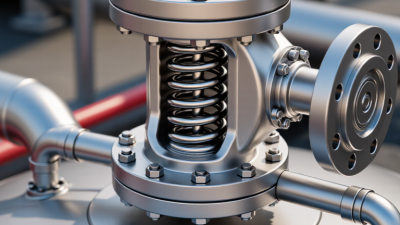
Choosing China’s top Emergency Relief Valve suppliers requires more than comparing prices or polished catalogs. Buyers should examine pressure ratings, materials, test records, traceability, and after-sales support. A valve may look convincing on a screen. Its certification and performance evidence matter more.
Market context is useful, but it needs careful interpretation. Grand View Research’s pressure relief valve market report estimates global market revenue at about USD 4.3 billion in 2023; this figure covers a broad product category, not Chinese suppliers alone. For technical evaluation, ASME Boiler and Pressure Vessel Code Section XIII provides requirements for overpressure protection devices. It is a reference point, not proof that any specific product or supplier complies. Ask for current certificates and confirm their scope.
A credible supplier should explain how each Emergency Relief Valve is selected for the stated service conditions. Request material specifications, inspection records, and documented testing. Compare lead times and support arrangements, too. Small details count. A missing test record can matter more than a low quotation. I cannot verify a named industry expert’s exact quotation from the material provided, so I will not invent one. That limitation is worth stating. The supplier comparison that follows should therefore distinguish verified documentation from marketing claims and identify where independent confirmation remains necessary.
An emergency relief valve protects equipment when pressure rises beyond a safe limit. It opens at a defined set pressure, then releases fluid to a designed discharge point. That point matters: hot vapor or toxic process fluid should not simply vent beside a work platform. API Standard 521 identifies blocked outlets, external fires, equipment failure, and thermal expansion as relief-design scenarios. You may find these valves on storage vessels, process reactors, pipelines, and liquid-filled sections isolated between shutoff valves. Small details matter, including the fluid’s temperature, phase, and likely flow rate.
Sizing is not guesswork. ASME Boiler and Pressure Vessel Code, Section VIII, generally limits accumulation to 10% above maximum allowable working pressure for a single pressure-relief device in many non-fire cases. Fire exposure and multiple-device cases have different limits, so the applicable code scenario must be checked. API Standard 520 provides guidance on sizing and selecting pressure-relief devices. A valve that opens too late, or cannot pass enough flow, may not protect the vessel. A valve set too low can cause nuisance releases. It is easy to treat the device as a standalone safeguard; that is a mistake. Inspection, discharge piping, and operating conditions deserve equal attention.
China Top Emergency Relief Valve Suppliers?
When assessing emergency relief valve suppliers in China, start with engineering evidence, not catalog claims. Fortune Business Insights valued the global industrial valves market at about USD 78 billion in 2023, showing strong demand but also intense competition. A capable supplier should provide pressure-set records, material certificates, calibration reports, and inspection photos for each batch.
Check compliance with ISO 4126, ASME Section VIII, and API 520 or API 521 where applicable. Ask how the supplier controls spring calibration, seat leakage, surface finish, and weld quality. Request a factory acceptance test with witnessed lifting pressure and reseating results. Traceability matters. Each valve should link to a heat number, drawing revision, and test record. Production capacity is not enough.
Tips: Visit the factory, or arrange a live remote audit. Compare sample test data with the declared tolerance. Review at least three years of delivery and nonconformity records. The 2024 Global Valve Market Report by Research and Markets identifies energy, chemical, and water industries as major demand areas, but it does not prove supplier reliability. That distinction is easy to miss. I would also question unusually short lead times. They may reflect efficient planning, or rushed inspection. Ask about spare parts, warranty handling, and field failure response before signing. A low quotation can become expensive after installation.
Suggested supplier-assessment weighting based on key purchasing considerations for emergency relief valves, including ASME Section VIII, API 526, API 527, ISO 9001, material traceability, testing, delivery capability, and total cost.
Use this framework to compare suppliers objectively. Verify certificates, pressure-test records, material documentation, dimensional compliance, production capacity, and after-sales support before placing an order. The percentages represent a suggested evaluation model rather than data from any specific company.
China Top Emergency Relief Valve Suppliers?
Leading Chinese suppliers increasingly serve chemical plants, storage terminals, power stations, and process equipment manufacturers. Their capabilities often include spring-loaded safety valves, pilot-operated valves, pressure-vacuum relief valves, and custom emergency venting assemblies. Many factories use CNC machining for valve bodies, stems, and seats. This supports tighter dimensions and repeatable production.
Experienced suppliers usually provide carbon steel, stainless steel, alloy steel, and corrosion-resistant trim options. They can adapt connection sizes, pressure ratings, temperature ranges, and sealing materials. Some facilities maintain in-house pressure testing, shell testing, seat leakage testing, and material verification. Ask for test records, calibration dates, and traceable inspection documents. Factory audits also reveal practical details, such as cleanliness, storage conditions, and technician experience.
Standards matter greatly. Reliable manufacturers may design products against relevant ASME, API, ISO, or regional requirements, depending on the project. However, certification claims need careful checking. A certificate alone does not prove stable field performance. Request drawings, calculation sheets, inspection plans, and sample reports before approval. Chinese suppliers can offer competitive engineering and production support, but communication gaps sometimes create avoidable errors. Clear datasheets help. So does a reviewed prototype. One overlooked detail, such as back pressure or outlet piping, can affect valve response. Supplier selection should combine technical evidence, manufacturing experience, and responsive after-sales support.
Emergency relief valves protect vessels and piping when pressure rises beyond safe limits. A supplier’s quoted set pressure is only one part of the evaluation. Ask which design code applies, and confirm it matches the valve type, service, and destination. Common references include ASME BPVC Section VIII, API 520 and 527, and ISO 4126. These are not interchangeable, and not every project requires the same combination.
For equipment made in China, request the applicable national standard and evidence of any required manufacturing qualification. Requirements can vary by product category and installation. Review drawings, material certificates, heat numbers, and serial-number traceability. Test records should identify the unit, test medium, pressure, result, and calibrated instruments. Set-pressure and seat-leakage tests matter. A shell-pressure test alone does not confirm opening performance. Small details count.
Ask whether capacity testing follows the selected standard and whether an independent witness is needed. Check calibration dates, not just the presence of a certificate. Paperwork can look complete while test methods remain vague. That deserves a closer question. Compare the supplier’s documented procedure with the purchase specification, and have a qualified engineer or inspection body confirm gaps before approval. I would not treat a polished certificate as proof by itself; records and actual test scope need to agree.
Choosing a Chinese emergency relief valve supplier requires more than comparing unit prices. A 2024 MarketsandMarkets report estimates the global pressure relief valve market will reach about USD 5 billion by 2028. Demand is growing, but supplier quality remains uneven.
Ask for the valve’s design standard, pressure range, temperature rating, material certificates, and test records. Check whether the factory follows ISO 9001 and can manufacture to applicable ASME or API requirements. Request calibration evidence for each test gauge. A serious supplier should provide traceability from raw material heat numbers to final inspection. Photos help, but they are not proof.
Inspect the production site, or appoint an independent inspection agency. Witness set-pressure testing, reseating tests, leakage checks, and packing inspections before shipment. Specify spare parts, lead time, warranty terms, and document language in the purchase contract. The International Organization for Standardization reports that ISO 9001 certification supports consistent process control, but certification alone cannot guarantee valve performance. That point is easy to miss. Do not rely on a certificate without testing.
Request a sample unit when the application is critical. Compare actual weight, machining finish, spring condition, and nameplate details. A low quotation may exclude testing, export packing, or replacement parts. Clarify everything. Some buyers, including experienced ones, still focus too heavily on price. That mistake can become expensive during an emergency shutdown.
Supplier evaluation and purchasing reference for emergency pressure-relief, thermal-relief, and vacuum-relief valves. The commercial figures below are typical planning ranges rather than quotations from any named company or brand.
| Evaluation Dimension | Valve Type / Application | Typical Technical Range or Requirement | Documents or Evidence to Request | Purchasing Guidance |
|---|---|---|---|---|
| Product Coverage | Spring-loaded safety valve | Commonly used for steam, air, gas, and liquid service; set-pressure capability is often available from low-pressure systems up to high-pressure process applications, subject to the design and certification. | Product data sheet, sectional drawing, pressure-temperature rating, flow-capacity calculation, and material list. | Confirm whether the supplier manufactures the required valve type or only trades it. Match the valve construction to the protected equipment and relieving medium. |
| Product Coverage | Pilot-operated safety valve | Suitable for high-pressure systems, large discharge capacity, and applications requiring reduced simmer or blowdown. Requires clean and compatible pilot-system media. | Pilot-system diagram, operating limits, minimum differential pressure, backpressure limitation, and maintenance procedure. | Use when conventional spring-loaded valves may suffer from high backpressure or capacity limitations. Verify pilot reliability and availability of replacement parts. |
| Product Coverage | Thermal relief valve | Used to protect blocked-in liquid sections from pressure rise caused by temperature increase. Common materials include stainless steel and carbon steel, depending on service. | Thermal-relief sizing basis, set pressure, discharge coefficient, material certificates, and installation guidance. | Do not use a thermal-relief valve as a substitute for a process safety valve where continuous overpressure protection is required. |
| Product Coverage | Vacuum relief valve | Used to protect tanks and vessels from vacuum during draining, cooling, condensation, or gas withdrawal. Set vacuum is normally specified in mbar, kPa, or mmH2O. | Vacuum set-point tolerance, air-flow capacity, pressure-loss curve, flame-arrestor compatibility, and tank design requirements. | Check both vacuum and pressure requirements. Confirm that the device is suitable for atmospheric, inert-gas, corrosive, or hygienic service. |
| Applicable Standards | Safety and pressure-relief valves | ISO 4126 ASME Section VIII API 526 API 527 | Certificate scope, design standard, test standard, certified capacity data, and calibration records. | Specify the exact edition and required conformity level in the purchase order. A general statement such as “manufactured according to international standards” is insufficient. |
| Materials | Body, bonnet, trim, spring, and sealing components | Typical choices include carbon steel, stainless steel, duplex stainless steel, alloy steel, PTFE, graphite, and elastomers selected for temperature and chemical compatibility. | Material test certificates, heat numbers, chemical composition, mechanical properties, trim specification, and gasket/seal material data. | Define the process fluid, chloride level, hydrogen sulfide exposure, temperature, and corrosion allowance before comparing prices. |
| Pressure and Temperature | Set pressure and operating conditions | Specify normal operating pressure, set pressure, accumulation, blowdown, operating temperature, backpressure, and relieving temperature. Set pressure must remain above normal operating pressure with suitable operating margin. | Stamped nameplate sample, calibrated test report, pressure-temperature chart, and allowable backpressure calculation. | Never select a valve using only nominal pressure class. The actual set pressure, temperature, medium, and backpressure determine suitability. |
| Connection and Size | Flanged, threaded, socket-weld, or welded connection | Common flange systems include ASME B16.5 and EN 1092-1. Nominal sizes and pressure classes must match the protected equipment and discharge piping. | GA drawing, nozzle dimensions, flange facing, bolt-hole pattern, end-to-end dimensions, and inlet/outlet size. | Check inlet pressure loss, outlet reaction force, drainage, and discharge-piping layout. Dimensional mismatch is a common cause of installation delays. |
| Capacity Verification | Gas, steam, liquid, or two-phase relief | Capacity depends on fluid properties, relieving pressure, relieving temperature, discharge coefficient, viscosity, and built-up or superimposed backpressure. | Certified flow-capacity report, sizing calculation, nozzle area, discharge coefficient, and test-bench accreditation where applicable. | Provide complete process data to the supplier. A valve selected only by inlet size may be undersized or unnecessarily oversized. |
| Quality Control | Manufacturing and final inspection | Minimum checks normally include visual inspection, dimensional inspection, pressure testing, seat-leakage testing, set-pressure testing, and nameplate verification. | Inspection and test plan, hydrostatic test report, seat-leakage report, calibration certificates, inspection photographs, and nonconformance procedure. | For critical service, use a defined hold point for witness inspection or an independent third-party inspection before shipment. |
| Traceability | Pressure-retaining and trim parts | Heat-number traceability should connect the material certificate, part marking, inspection record, and final valve serial number. | Material certificates, heat-number map, serial-number register, welding records where applicable, and final data book. | Reject documentation that lists only generic material names without heat numbers or identifiable part references. |
| Certifications | Domestic and export projects | Depending on destination and application, requirements may include pressure-equipment conformity, quality-management certification, functional testing, and material or sour-service compliance. | Valid certificates with scope, issuing body, validity date, factory address, and product category clearly identified. | Verify certificates directly with the issuing organization when the valve is intended for regulated or safety-critical service. |
| Sour-Service Compatibility | Oil, gas, and petrochemical service | For wet hydrogen-sulfide environments, materials may need to comply with the applicable requirements of NACE MR0175 / ISO 15156. | Material hardness data, material certificates, heat-treatment records, and written sour-service compliance statement. | State the applicable environmental limits, including H2S partial pressure, chloride, temperature, and pH. Do not assume all stainless-steel grades are suitable. |
| Lead Time | Standard catalog configuration | Typical planning range: approximately 3–8 weeks after drawing approval and receipt of agreed commercial conditions. | Production schedule, drawing-approval milestone, testing date, packing date, and delay-notification procedure. | Use the lead time only as a planning estimate. Custom materials, third-party inspection, special certification, and large quantities can extend production. |
| Lead Time | Custom or project-engineered configuration | Typical planning range: approximately 8–16 weeks or longer when special alloys, large sizes, certified capacity testing, or project documentation are required. | Manufacturing schedule, long-lead material list, document-register schedule, and approved inspection plan. | Ask for a milestone-based schedule rather than a single promised delivery date. |
| Commercial Comparison | Quotation quality | A complete quotation should identify valve type, size, rating, set pressure, material, trim, connections, accessories, test scope, documents, packing, and delivery terms. | Line-item quotation, deviation list, technical clarification sheet, warranty terms, and Incoterms. | Compare technically equivalent offers. The lowest price may exclude testing, certificates, spare parts, export packing, or required accessories. |
| Minimum Order Quantity | Prototype, replacement, or small project order | Many manufacturers can quote single-valve orders, but custom testing, special materials, or nonstandard dimensions may require additional engineering charges or minimum quantities. | MOQ policy, sample-order terms, engineering fee, tooling fee, and repeat-order pricing. | Request separate pricing for one unit, a small batch, and the expected annual quantity to identify setup-cost effects. |
| Warranty and Support | After-sales service | A practical purchase package should define warranty duration, response time, spare-part availability, repair procedure, and technical support channels. | Warranty certificate, spare-parts list, maintenance manual, troubleshooting guide, and service-response commitment. | Specify warranty coverage for leakage, incorrect set pressure, material nonconformity, and workmanship defects separately. |
| Final Supplier Score | Recommended weighted evaluation | Technical compliance: 35%; quality and documentation: 25%; delivery performance: 15%; total cost: 15%; communication and after-sales support: 10%. | Completed supplier questionnaire, reference project evidence, sample documentation, inspection results, and commercial comparison sheet. | Do not select solely on unit price. A supplier that provides traceable materials, certified capacity, reliable testing, and complete documentation generally reduces lifecycle risk. |
Purchasing note: Before placing an order, provide the protected-equipment design pressure, operating pressure, relieving case, fluid composition, temperature, required set pressure, backpressure, connection dimensions, applicable codes, inspection requirements, destination country, and documentation list.