Leave Your Message

2026 Top Pressure Relief Valve Types for Global Buyers

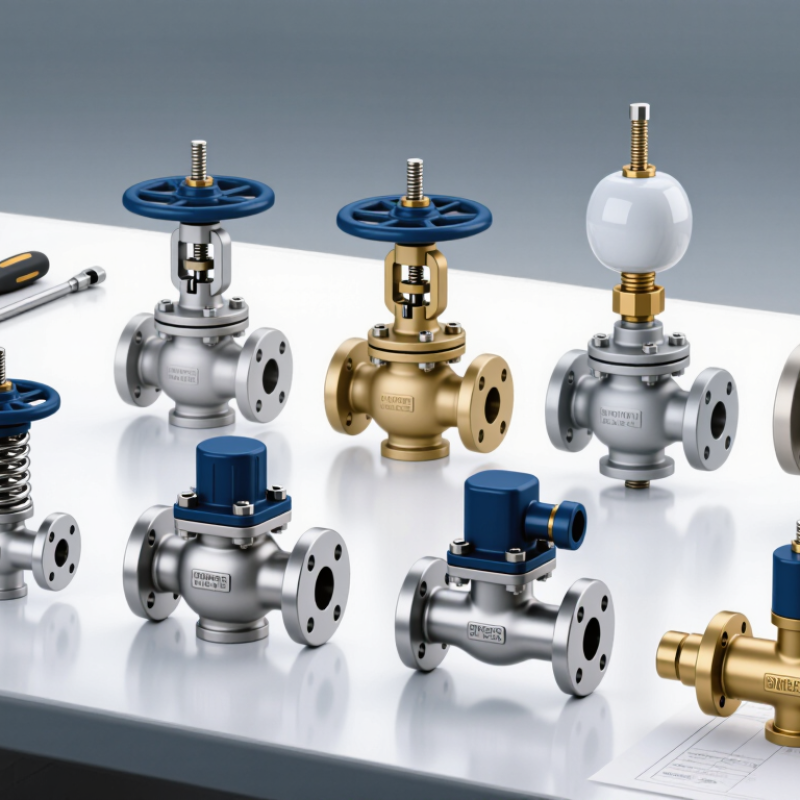
Choosing a Pressure Relief Valve in 2026 is not a catalog exercise. Buyers must match valve design to the protected equipment, fluid, operating pressure, temperature, and discharge conditions. A compact spring-loaded valve may suit a straightforward service; changing backpressure can make a balanced-bellows or pilot-operated design worth evaluating. For trapped liquid, thermal relief may be the relevant option. Details matter.

Safety researcher James Reason wrote, “We cannot change the human condition, but we can change the conditions under which humans work.” His observation is not a valve-sizing rule, but it highlights why clear specifications and disciplined reviews matter. This guide compares common Pressure Relief Valve types, their operating principles, and practical selection considerations for global buyers. It also looks at capacity, materials, maintenance access, and documentation—details that can be easy to overlook when comparing prices.

No single type fits every application. Not even close. A tidy comparison table can hide important differences between process conditions and installation layouts. That limitation deserves attention. Treat this overview as a starting point, then confirm sizing and suitability with qualified engineers and the applicable project requirements. A few minutes spent checking backpressure, set pressure, and discharge routing can prevent a costly mismatch.
2026 Top Pressure Relief Valve Types for Global Buyers

What a Pressure Relief Valve Does in a Pressurized System

In a pressurized system, a pressure relief valve acts as a mechanical safeguard. When pressure reaches its set point, the valve opens and releases some fluid or gas through a designated outlet. As pressure falls, it should close again. That sounds simple. It isn’t.

Consider a pump pushing water into a line whose outlet becomes blocked. Pressure can rise quickly, stressing pipes, seals, and connected equipment. A correctly selected relief valve provides a path for excess pressure to escape before it exceeds the system’s intended limits. It does not replace pressure controls or sound system design. The set pressure, flow capacity, fluid properties, temperature, and outlet conditions all matter. A discharge pipe that is too restrictive can affect performance, while an outlet aimed at a walkway creates an avoidable hazard.

The valve must match the actual operating conditions, not just the connection size. Installation details matter. In service, corrosion, deposits, or a weakened spring can change how a valve responds; inspection and testing help identify these issues. I have seen specifications treat the valve as a simple accessory, which deserves a second look. A relief device is only useful when its settings, installation, and maintenance fit the system it protects.
How Pressure Relief Valves Are Classified by Design

2026 Top Pressure Relief Valve Types for Global Buyers

How Pressure Relief Valves Are Classified by Design

Pressure relief valves are often classified by how they detect pressure and open the discharge path. A spring-loaded valve uses a spring to hold the disc against its seat. When inlet pressure reaches the set point, the disc lifts and releases fluid. This compact design is common in process lines and equipment where a straightforward mechanism is preferred.

Simple, but not universal.

Pilot-operated valves use a smaller pilot valve to control a main valve. They can suit systems that need high capacity or stable operation near the set pressure, though pilot passages may require attention if the fluid carries debris. Balanced designs use a bellows or piston to reduce the influence of outlet backpressure on opening pressure. They do not make installation conditions irrelevant.

Labels can mislead. A valve’s design category alone cannot confirm suitability: buyers should also check the medium, temperature, set pressure, discharge piping, and expected backpressure. For example, a valve installed downstream of a long, narrow pipe may face different outlet conditions than one venting directly into a header. Check the manufacturer’s technical documentation and have sizing reviewed against actual operating data.

Common Pressure Relief Valve Types and How They Operate

Pressure relief valves protect vessels and piping when pressure rises beyond a set limit. A spring-loaded valve uses a coil spring to hold its disc against the nozzle; excess pressure lifts the disc, releasing fluid through the outlet. Conventional designs are straightforward, but outlet backpressure can affect their opening pressure. Balanced-bellows designs reduce that effect, while pilot-operated valves use system pressure to hold the main valve shut until a pilot senses the set point. They can suit large flows or operating pressures near the set point. That matters.

API Standard 520, Part I, provides sizing guidance for pressure-relieving devices, including valve capacity calculations. ASME BPVC Section VIII, Division 1 (2023) specifies set-pressure tolerances of ±2 psi at settings up to and including 70 psi, and ±3% above 70 psi. These figures are useful checks, not substitutes for the applicable design requirements. Selection also depends on fluid phase, temperature, corrosion risk, and built-up backpressure. A valve that performs well on clean steam may behave differently with a viscous liquid. Small details matter. In practice, engineers should verify sizing assumptions and inspect the inlet and discharge piping; the neat valve diagram rarely captures every site condition.

How Materials, Pressure Ratings, and Standards Differ Across Markets

2026 Top Pressure Relief Valve Types for Global Buyers

How Materials, Pressure Ratings, and Standards Differ Across Markets

A valve’s nominal pressure class is not its safe operating limit. ASME B16.34 pressure-temperature tables vary allowable pressure by material group and temperature; hotter service can reduce the rating. Stainless steel may suit corrosive process fluids, while carbon steel is common in less aggressive service. Neither choice is universal. Check fluid compatibility, temperature, corrosion allowance, and trim materials against actual operating data. The uncomfortable detail: matching flange classes does not prove that a valve is suitable.

Standards also change the selection work. In the United States, ASME BPVC Section VIII, Division 1, UG-125(c), generally limits pressure rise to 10% above maximum allowable working pressure, or 3 psi, whichever is greater; fire exposure has a different allowance. For global projects, compare this basis with applicable EN ISO 4126 requirements and local vessel rules. API 520 Part I sizing methods also require inputs such as fluid phase, temperature, and backpressure. A set pressure alone is not a complete specification.

Tips: Request the certified capacity, material certificates, set-pressure tolerance, and temperature-specific rating. Confirm units and gauge-versus-absolute pressure. Have the responsible engineer review the final sizing; small input errors can matter.

How Global Buyers Select the Right Pressure Relief Valve Type

2026 Top Pressure Relief Valve Types for Global Buyers

How Global Buyers Select the Right Pressure Relief Valve Type

Start with the service, not the valve catalogue. Record the fluid, normal operating pressure, maximum allowable pressure, temperature, and required relieving capacity. A spring-loaded valve often suits stable, clean services. A pilot-operated design may help where operating pressure sits close to set pressure. For steam or flashing liquids, confirm the valve’s certified capacity and discharge arrangement. Small details matter.

API Standard 520 Part I covers pressure-relief device sizing and selection; API Standard 521 addresses relieving scenarios and disposal systems. These are useful engineering references, not substitutes for application-specific calculations. Grand View Research estimated the global industrial valves market at USD 78.4 billion in 2023, with projected growth through 2030. That figure covers many valve types, not pressure relief valves alone. Still, it shows why buyers should compare technical fit, not just purchase price.

Check inlet pressure loss, outlet backpressure, materials, connection standards, and service access. A valve that works on paper may chatter if the piping creates excessive pressure loss. Ask for sizing calculations, certification documents, and clear maintenance intervals. Compare like with like. Even then, the “best” type can change when the process data changes. That part is easy to overlook.

2026 Top Pressure Relief Valve Types for Global Buyers — How to Select the Right Type

Valve Type How It Works Typical Service Main Advantages Key Limitations Buyer Selection Checks
Conventional spring-loaded safety relief valve A spring holds the disc against the nozzle until inlet pressure reaches the set pressure. The valve then opens to relieve excess pressure. Commonly used on vessels and piping where backpressure at the outlet is low and relatively stable. Safety valves are generally associated with compressible fluids; relief valves are commonly applied to liquid service. Simple construction, broad availability, and no external pilot system required. Variable superimposed or built-up backpressure can affect set pressure and valve capacity. Discharge piping must be designed to manage backpressure. Confirm fluid phase, set pressure, allowable overpressure, expected backpressure, discharge arrangement, materials, and applicable local code.
Balanced-bellows spring-loaded valve A bellows helps reduce the effect of backpressure on the disc and spring chamber. Some designs also isolate the spring from the process fluid. Service where outlet backpressure varies, or where process fluid should be kept away from the spring and guiding components. Less sensitive to backpressure than a conventional design within the manufacturer’s stated limits; can help protect internal components from process exposure. Bellows integrity is important. A damaged bellows can affect performance, and the vent connection must be correctly arranged and kept clear. Check the permitted backpressure, bellows material compatibility, venting requirements, temperature limits, and any required bellows-failure monitoring.
Pilot-operated pressure relief valve A small pilot senses system pressure and controls the main valve. Depending on the design, system pressure may help keep the main valve tightly closed below its set point. High-pressure or large-capacity applications, and services where tight shutoff near the operating pressure is important. Can provide high capacity and tight operating-pressure performance in suitable applications; certain designs accommodate backpressure conditions. More complex than a direct spring-loaded valve. Pilot passages may be sensitive to contamination, and operation depends on pilot configuration and service conditions. Verify pilot type, sensing arrangement, fluid cleanliness, minimum operating conditions, backpressure limits, maintenance access, and fail-safe behavior.
Thermal relief valve A small relief device opens when trapped liquid expands and causes pressure to rise in an isolated section. Blocked-in liquid piping, equipment sections, and other liquid-filled spaces exposed to heating. Provides protection against pressure rise caused by thermal expansion; typically suited to relatively small relief flows. Not a substitute for a process safety valve sized for fire exposure, runaway reactions, or major process upset scenarios. Identify all blocked-in liquid volumes, estimate credible heat input and expansion, confirm discharge destination, and select compatible wetted materials.
Vacuum relief valve Opens inward or admits gas when internal pressure falls below the device’s specified opening pressure, limiting vacuum in the protected equipment. Storage tanks and equipment that may experience vacuum during pump-out, cooling, or other operating changes. Helps prevent equipment damage from excessive vacuum and can be configured for specified gas or vapor handling requirements. It protects against vacuum rather than relieving positive overpressure. Inlet capacity, emissions control, and contamination risks need consideration. Check the vessel’s allowable vacuum, required air or gas inflow, operating temperature, vapor-control strategy, and relevant tank design requirements.
Combined pressure-and-vacuum relief valve Combines outward relief for positive pressure with inward admission when a vacuum condition develops, using separate or integrated operating elements. Atmospheric and low-pressure storage tanks subject to both pressure and vacuum conditions. Provides two-way pressure protection in a single assembly and may support controlled tank venting. Capacity and settings for the pressure and vacuum sides must be evaluated separately. It is not automatically suitable for higher-pressure vessel service. Confirm tank design limits, pressure and vacuum set points, required capacities in both directions, vent connection size, and emissions requirements.
Safety relief valve for combined gas and liquid service A relief device designed to handle the specified service conditions; opening behavior and certified capacity depend on its construction and application. Applications where the relieving phase may vary or where the equipment can contain both liquid and vapor under credible relief scenarios. Can be selected for mixed-phase or changing service when the device and sizing method are suitable for the actual scenario. Two-phase flow can be difficult to predict and may require specialized engineering analysis. A standard gas-only or liquid-only sizing assumption may be inappropriate. Define the credible relieving scenario, phase composition, fluid properties, inlet losses, outlet backpressure, and required calculation method before selection.